

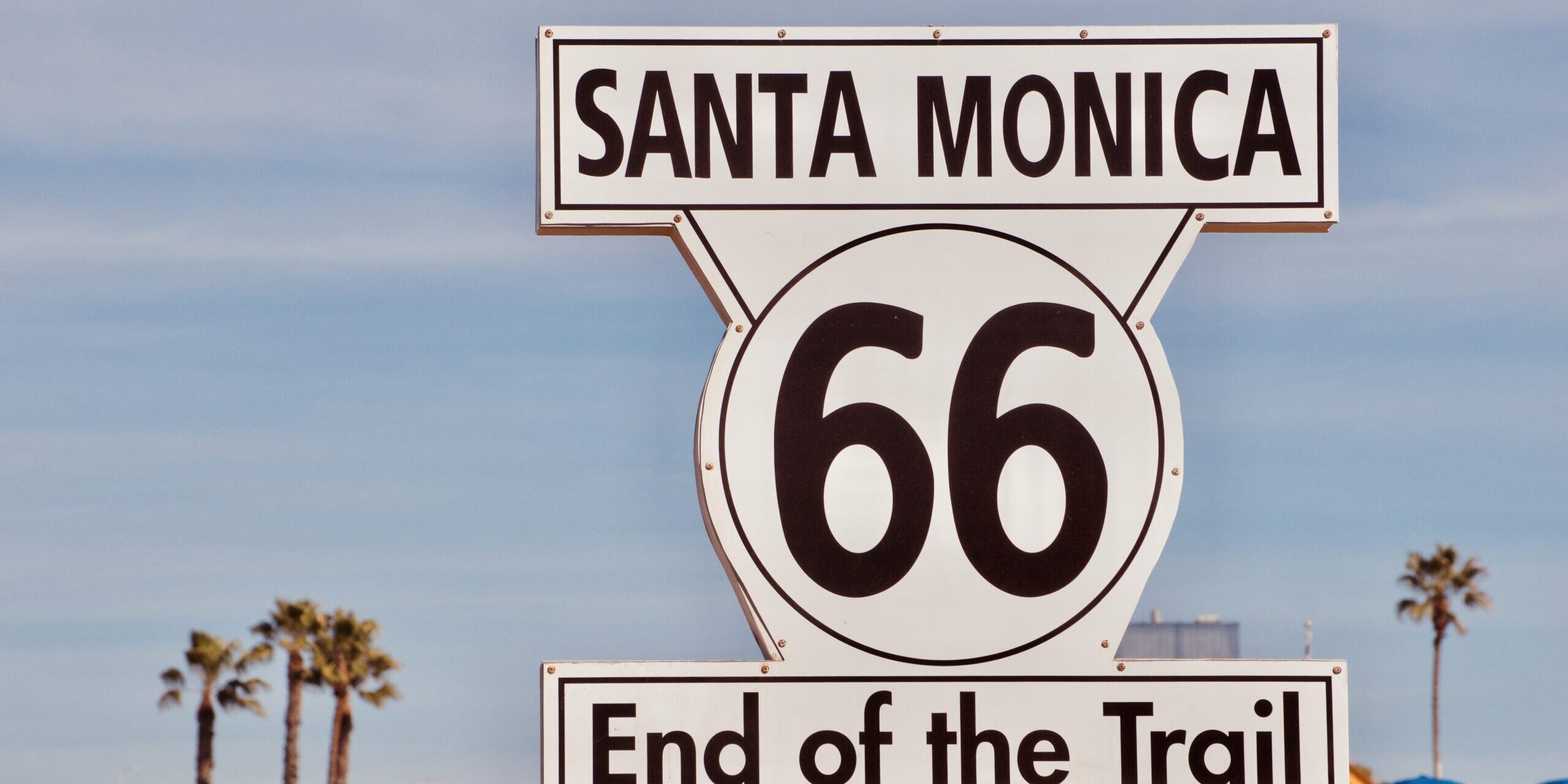
Route 66 officially received its designation on November 11, 1926, stretching 2,448 miles from Chicago to the California coast. If you’ve been to the Santa Monica Pier and looked out at the Pacific, you have stood at the symbolic end of one of America’s most famous highways.
The road that built Los Angeles.
Route 66 didn’t just connect cities, it delivered people. In the 1930s, it carried hundreds of thousands of Dust Bowl families out of Oklahoma, Texas, and Arkansas and pointed them toward California. Los Angeles was the destination for so many of them, and the city’s population boomed as a result.
Then came World War II, when the federal government poured enormous investment into Southern California’s defense industry and needed workers to fill the plants. Route 66 was the highway that brought them here. Many of those workers stayed in California after the war and bought homes in the developing suburbs along the old route. By 1962, California had become the country’s most populous state, partly because of Route 66.
In the postwar years, the highway’s character shifted. Returning veterans and young families began using it for something new: the great road trip across America. Car ownership was exploding, the economy was booming, and the open road was a symbol of freedom and possibility. Los Angeles became the ultimate destination, the city at the end of Route 66 where you could cash in on your dreams.
One of the interesting things about Route 66 is the businesses that popped up along the way. Because the highway ran directly through towns rather than around them, local businesses benefited from cross-country travelers needing food, fuel, and a place to sleep. This new demand spawned innovative retail concepts like the drive-in restaurant, the motor court, the roadside attraction and the neon sign culture that lit up every mile of the route. What looks nostalgic to us today was cutting-edge in 1950.
Several of those businesses are still around in Los Angeles today. Mel’s Drive-In at Lincoln and Olympic in Santa Monica sits at the official western end of Route 66. The building, the former Penguin Coffee Shop, is a restored 1959 Googie-style coffee shop characterized by sweeping rooflines and plate-glass windows specifically designed to catch the eyes of passing motorists. Norm’s in West Hollywood and Pann’s (a personal favorite) in Westchester are two more surviving Googie landmarks from the same era, both still serving classic diner food in buildings that look almost exactly as they did sixty years ago.
What this means for Los Angeles real estate.
The highway created housing demand. Pasadena, Santa Monica and West Hollywood are some of the neighborhoods along Route 66’s California corridor. The architecture of these neighborhoods reflects those waves: Craftsman bungalows from the early years, Spanish Colonial Revival homes from the 1920s and 30s, and mid-century ranch homes from the postwar boom. This history translates into what many buyers look for today: homes with genuine character, walkability, good schools and established infrastructure.
Route 66 brought people here because they believed in what California, specifically Los Angeles, offered. That appeal hasn’t changed. The same qualities that drew generations of Americans to the West Coast—climate, opportunity and creativity—still make Los Angeles one of the world’s most desirable places to live.
About Nicole Strober
Nicole Strober is a Realtor® with Compass and a native Angeleno. Her core focus is Culver City, Beverlywood, Cheviot Hills, West Adams, Baldwin Hills, Ladera Heights and surrounding Westside neighborhoods, with additional transactions across Los Angeles including Highland Park, the San Fernando Valley, Burbank, and South LA. Under her brand, Strober Homes, she helps buyers and sellers navigate the Los Angeles real estate market with a strategic and hands-on approach, taking time to understand what matters most to each client and guiding them through the process from beginning to end.
Nicole Strober | Strober Homes
Thoughtful Guidance • Strategic Marketing • Exceptional Results
📞 424.744.7282 📧 Nicole@NicoleStrober.com 🌐 StroberHomes.com